A Founder's Story
Seventeen dollars a week, two kids, and a magazine on a layover in Dallas.
This is the long version. The unedited story of how Scott Klintworth went from a young single father with almost nothing to the founder of an eight-figure home service company — and what he learned about family, work, and the cost of both along the way.

Chapter I
Before the company
Before there was a company, there was a young father raising two little girls on his own. Scott's first wife had passed away. He was in his twenties, working what work he could find, and the math of his life looked like this: seventeen dollars a week to live on.
He doesn't tell that part of the story often. But it's the part that shaped everything that came next. Because when you've been that broke, that early, with two children watching you — you stop being afraid of hard work. You start being afraid of staying still.
For more than a decade he raised those girls alone, until they were almost teenagers. Nobody in those years ever asked him what he did for a living. That's a detail he holds onto. When you have nothing, people don't ask. When you have something, they only ask about that.
Chapter II
A magazine on a layover
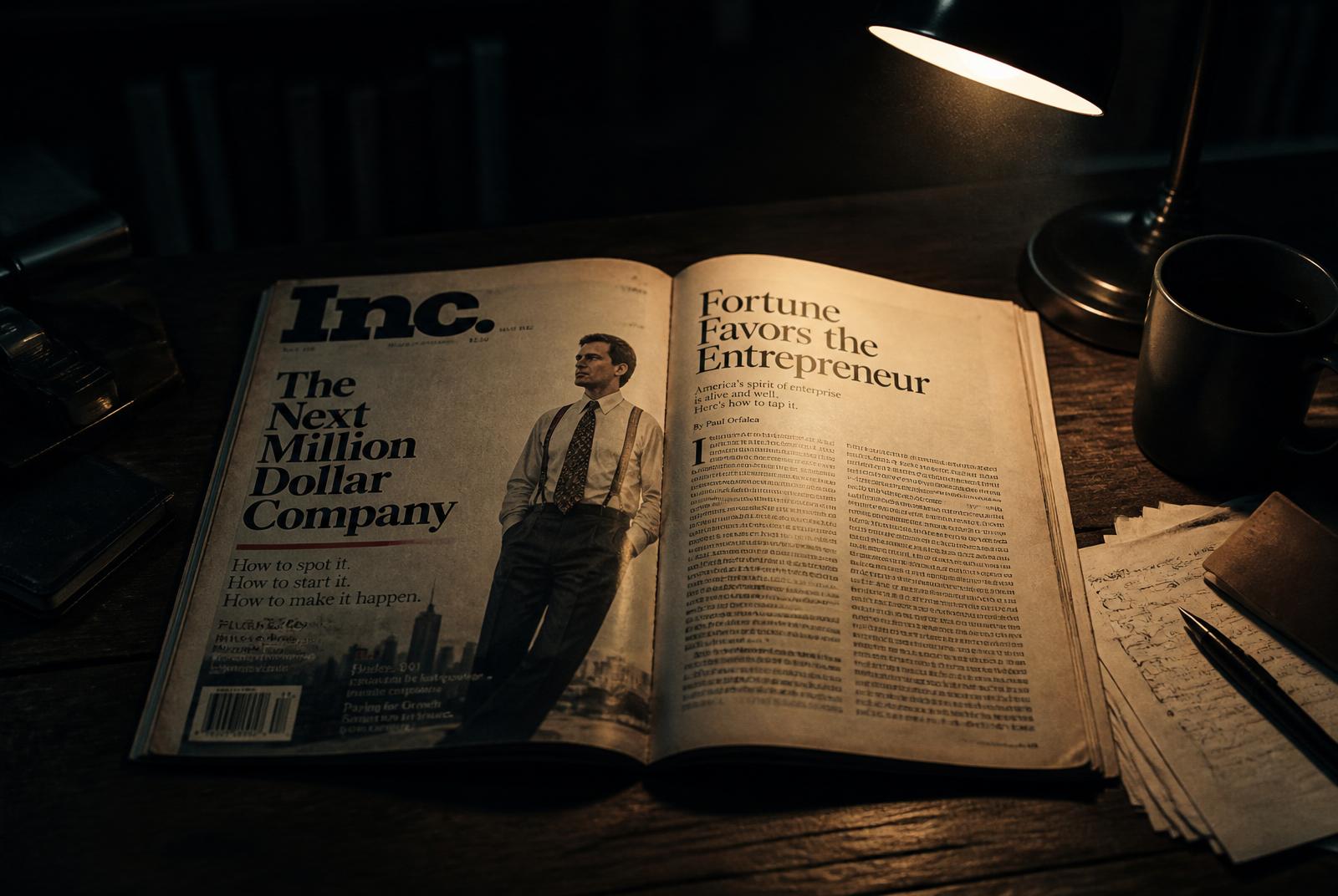
1991. A flight delay in Dallas. Scott picked up an Inc. Magazine off a rack to kill time, and turned to a profile of the year's entrepreneur of the year — a guy out of Dallas who had grossed a million dollars his first year in business with no formal training, no MBA, no head start.
Scott will tell you he didn't care about the business model. He didn't care about the strategy. What he saw was the number. A million dollars. And underneath it, four quiet words that lit a fuse: without any education.
He flew home to Tulsa, Oklahoma, and that week he enrolled in a two-year night program at the local vocational school. The subject was appliance repair. He picked it because it was a trade you could start with your own hands and a van — and because it was something the world would always need someone to fix.
Chapter III
Houston, fourteen hours a day
When the family eventually moved to Houston, Scott began the chapter most founders never talk about: the long, boring, exhausting middle of doing the work yourself.
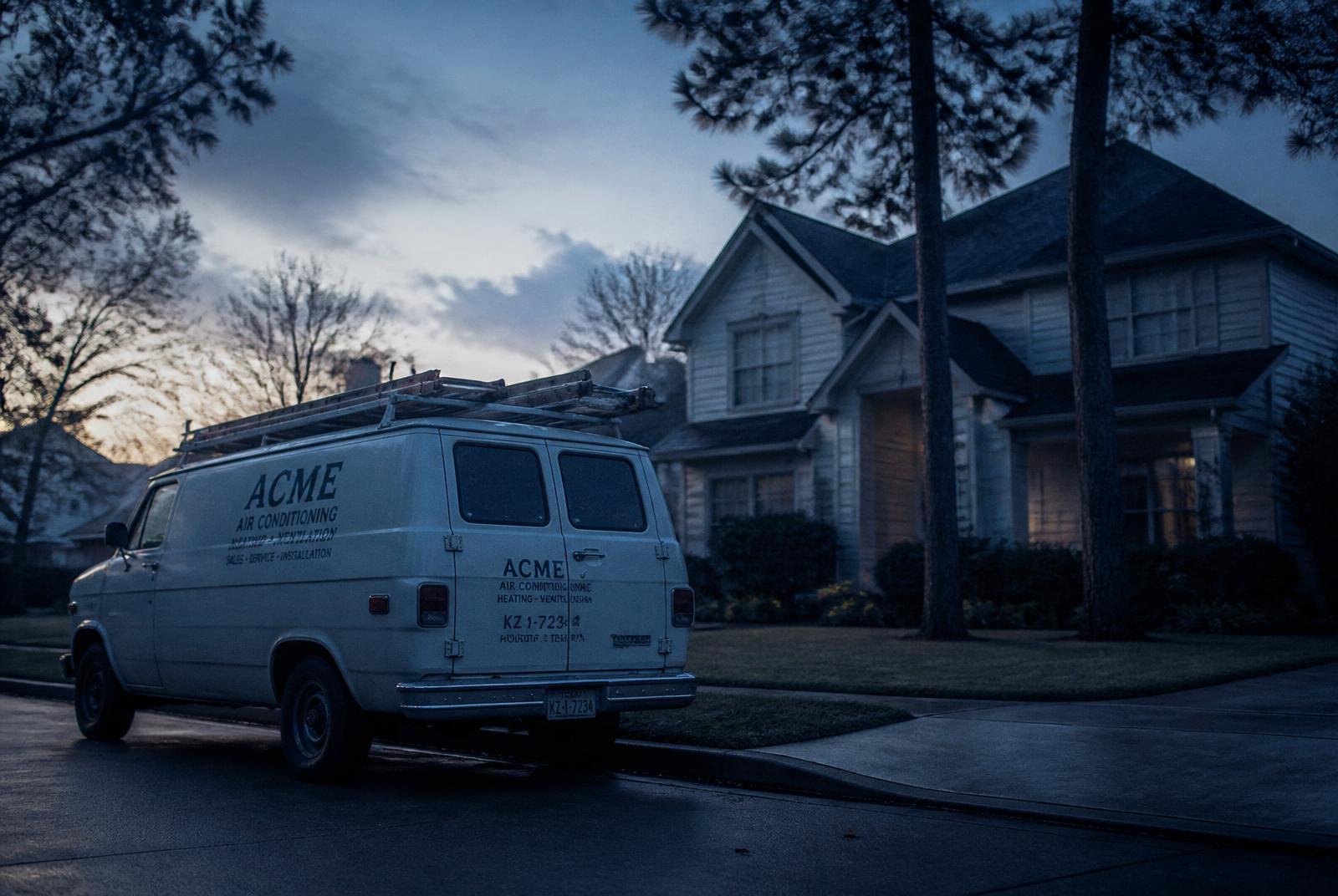
Houston is the largest city in the United States by land mass. He drove every inch of it. Up at five in the morning. Out the door before the sun. He'd trace a wide circle around the city all day — washer, dryer, refrigerator, dishwasher, washer, dryer — and pull back into the driveway around six in the evening.
Then he'd start his second job: the paperwork. Invoices, warranty claims, parts orders, schedules. He'd work at the kitchen table until midnight. Five hours of sleep. Up at five again.
Fourteen, fifteen hours a day. Every day. Alone in a truck. For years.
Chapter IV
The first technician
Hiring his first technician was the moment the company stopped being a one-man trade and started being a business. Scott will tell you he didn't plan it that way. He just couldn't keep up. The phone was ringing faster than one man in a van could drive.
He hired carefully. Quietly. The way he still hires today: not for the résumé but for whether the person could be trusted in someone else's home at nine o'clock at night. The work is technical, but the job is trust.
By the time he had four technicians on the road, the math had changed. The business needed someone who could lead people, not just fix things. He had been looking for that person on the outside. She had been sitting across the dinner table from him the whole time.
Chapter V
Debbie
Debbie had one of the great sales jobs in America. She sold pacemakers and defibrillators — top one percent of medical device sales, the kind of work where reps often out-earn the cardiologists implanting their product.
She walked away from it to come help build her husband's company.
Scott is the first to tell you the truth of what happened next: he could not have scaled the business without her. He had the trade. She had the operator's mind. She could drive people, set standards, run a room. The first technician made the business possible. Debbie made it real.
The company is named for her, and for their three children: Debbie, Scott, Spencer, Sophia. D-3-S.
“The most important decision in business isn't a strategy. It's who you marry. If you don't have the right partner at home, I don't know how you build anything that lasts.”
— Scott Klintworth
Chapter VI
Eight figures, four hundred calls a day
Today the company runs about four hundred service calls a day across multiple states. Eight figures of annual revenue. A warranty operation working hand-in-hand with the biggest appliance manufacturers in the country, and a growing direct-to-consumer arm.
Scott's oldest daughter — one of the two girls he raised on his own — runs the entire billing operation by herself. Work that would take most companies two people. She puts in the hours, the way her father did.
The other companies came from the same instinct. Sloan Appliance Repair, one of South Carolina's most established service brands. Mobile Cool Cube, the refrigerated mobile storage business serving restaurants, grocers, and emergency response. Three companies, one philosophy: be the one people trust to show up.

Chapter VII
What it actually cost
Scott does not pretend to have balance. Ask him directly and he'll tell you he didn't. His youngest daughter has told him for most of her life that she felt the company took too much of her parents. He doesn't argue with her. He carries it.
He remembers two Christmas Eves, early in the company's life, that he spent on his back behind a stranger's refrigerator putting in a compressor, while his own kids waited to open presents at home.
When he's asked now what he'd tell his twenty-year-old self, he gives two answers. Max out the Roth. Let it compound. And the second one, the heavier one: spend more time with your children. The business will still be there.

Chapter VIII
The philosophy
Scott's philosophy isn't complicated. After three decades of building, hiring, scaling, and getting sued for the first time, it comes down to a few things he repeats often.
On family: the right spouse is not a nice-to-have. It is the precondition. Everything downstream of that decision is easier; nothing upstream of it is fixable.
On people: the company is family — sometimes a dysfunctional one. You will get burned. You will help the next person anyway. That's the job.
On work: a calm business is a competitive advantage. Show up, do the work, keep your word. Volume of trust compounds the same way money does, and over thirty years it makes the difference between a truck and a company.
On identity: when someone asks what you do, the honest answer is not your job title. It's that you're a husband, a father, a neighbor — and you happen to have a gig that pays for the life you're actually living.
He doesn't plan on retiring. He plans on going to the office less. There's a difference.